
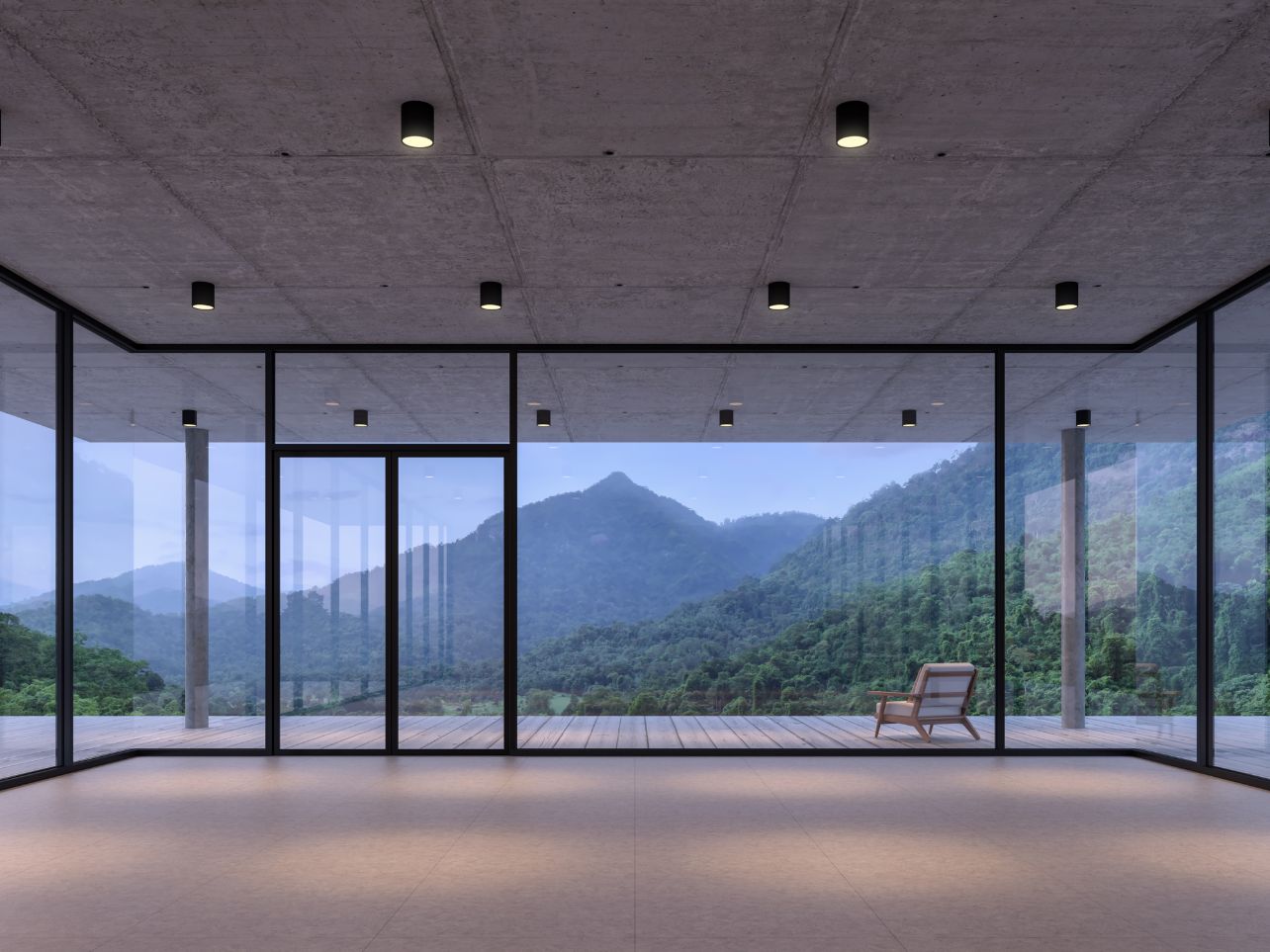
Contemporary architecture no longer treats glazing as a secondary element — a simple opening within a solid wall. Instead, structural glazing has become a defining architectural device in its own right. It shapes façades, replaces conventional load-bearing components, and redefines the relationship between light, structure and space.
For architects working at the forefront of residential and commercial design, structural glazing is not merely about transparency. It is about precision, performance, and the careful orchestration of materials to achieve clarity without compromise.
From Opening to Architectural Element
Traditionally, windows punctured masonry walls. Today, entire elevations dissolve into glass.
Structural glazing allows architects to think beyond framed apertures and instead conceive buildings as compositions of glass planes. Frameless corners eliminate visible junctions. Glass-to-glass connections remove the need for bulky mullions. Double-height structural panels create dramatic, uninterrupted façades.
In this context, glazing ceases to be infill. It becomes structure.
Structural glass fins, beams and bonded assemblies can support significant loads while maintaining visual lightness. Carefully engineered systems transfer wind and dead loads discreetly into the primary building frame, allowing façades to appear seamless and refined.
The architectural impact is profound. Elevations feel lighter. Internal spaces gain immediacy and openness. The boundary between inside and out becomes intentionally blurred rather than simply glazed.
Engineering Transparency
Achieving this level of minimalism demands rigorous technical design. The absence of visible framing does not reduce structural requirements; it intensifies them.
Structural glazing systems must be carefully calculated to accommodate:
- Wind loading and building height exposure
- Glass deflection limits
- Dead loads and load transfer
- Differential movement between materials
Laminated and toughened glass panels are often specified to ensure strength and post-breakage safety, particularly in large-format installations. Interlayers provide redundancy, while precise bonding and fixing methods maintain both structural performance and visual consistency.
Deflection tolerances are critical. Even minimal movement can compromise seals, drainage channels or glass-to-glass junctions if not engineered correctly. For this reason, early collaboration between architect, structural engineer and glazing specialist is essential.
At Architectural Structural Glazing, our in-house team works alongside project designers from concept stage, advising on structural feasibility, junction detailing and compliance considerations. This proactive approach ensures architectural ambition is supported by robust engineering from the outset.
Light as a Design Material
Structural glazing does more than remove frames; it transforms light into a central architectural material.
Full-height glass façades draw daylight deep into interior spaces, enhancing spatial perception and reducing reliance on artificial lighting. Frameless corners eliminate visual interruption, allowing panoramic views to extend uninterrupted across elevations. Roof glazing and structural glass links introduce top light, animating circulation spaces and creating moments of architectural drama.
The experiential quality of a space is directly influenced by how light is managed. With minimal visible structure, the eye is not drawn to framing but to landscape, sky, and interior volume. Flooring lines extend outward. Ceiling planes appear to float. Materials read with greater clarity.
In high-end residential projects, this approach supports open-plan living environments that feel expansive and connected to their setting. In commercial contexts, structural glazing reinforces transparency, collaboration and modern identity.
Glass becomes both enclosure and atmosphere — defining how a building feels as much as how it performs.
Performance, Compliance and Detailing
Minimalism must always be balanced with performance. In the UK, structural glazing systems must satisfy stringent requirements under Building Regulations, including Part L (energy efficiency), Part K (protection from falling and impact), and, where applicable, Part B (fire safety).
High-performance double or triple glazing with low-emissivity coatings and gas-filled cavities enables strong thermal performance, even in expansive glazed elevations. Warm-edge spacer bars and thermally broken interfaces help reduce heat loss and mitigate condensation risk.
Equally important is the management of thermal bridging at junctions. Concealed steel supports and structural connections must be carefully detailed to prevent cold spots and maintain envelope integrity.
Drainage and weatherproofing are also critical. Frameless thresholds and minimal interfaces require meticulously designed channels and seals to ensure long-term durability without compromising the aesthetic.
These details are rarely visible once a project is complete — yet they define its success.
With extensive experience in structural and architectural glazing, ASG delivers precision-engineered systems that integrate structural performance, thermal efficiency and visual refinement. Our design-to-installation control ensures that each element is crafted for architectural integrity as well as regulatory compliance.
Applications in Contemporary Architecture
The versatility of structural glazing allows it to enhance a wide range of project types.
In bespoke residential extensions, structural glass corners and sliding systems open previously enclosed spaces to gardens and courtyards. Glass roof panels introduce light into deep-plan layouts, transforming the character of period properties without compromising their external appearance.
For contemporary new-build homes, large-format structural glazing defines the architectural language from the outset. Entire façades can be composed of minimal glass planes, reinforcing clean geometry and uninterrupted sightlines.
Commercial projects benefit equally. Structural glazed entrances create striking first impressions, while expansive façades communicate openness and innovation. Glass links between heritage and modern structures allow contrasting architectural styles to coexist with clarity and respect.
In each scenario, the success of the installation depends not solely on the glass itself, but on the precision with which it is engineered, detailed and installed.
Designing Beyond the Frame
Structural glazing represents a shift in architectural thinking. It challenges the notion of walls as solid barriers and reframes glass as both structure and spatial device.
When executed with precision, it delivers more than transparency. It offers structural integrity, regulatory compliance and environmental performance — all while preserving a refined, minimalist aesthetic.
For architects and developers seeking to create light-led, contemporary environments, structural glazing provides both creative freedom and technical capability. The key lies in recognising its complexity and engaging specialists early to realise its full potential.
Speak to our structural glazing specialists to discuss how precision-engineered glass systems can support and elevate your next project.