
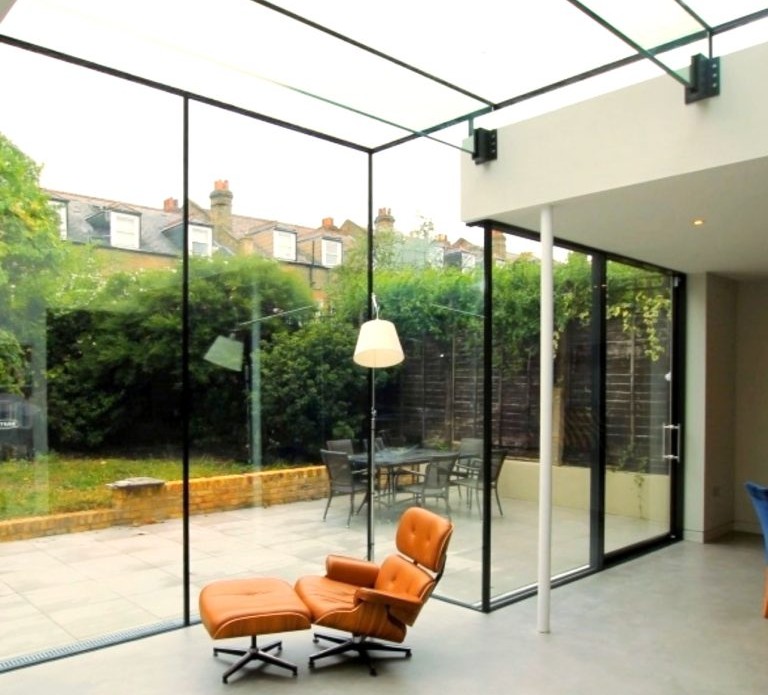
Oversized glass has an undeniable pull. It’s the element clients are often drawn to instinctively – the sweeping pane that frames a view, the full-height wall that fills a room with daylight, the moment where inside and outside seem to quietly blur into one.
For architects and designers, however, working at this scale can feel like a careful balancing act. The ambition is clear, but so are the questions: Will it feel comfortable? Will it work year-round? How do we make it elegant rather than overpowering?
When handled thoughtfully, oversized glass doesn’t just look impressive – it becomes a gentle but transformative presence in a building, shaping how spaces are used, felt and remembered.
Why Oversized Glass Continues to Inspire
At its core, oversized glass responds to something deeply human: our desire for light, openness and connection. Large panes allow daylight to pour into interiors, lifting spaces and giving them an ease that’s hard to replicate with artificial lighting alone.
Unlike conventional glazing, oversized glass doesn’t frame the outside world – it invites it in. A garden, landscape or city view becomes part of daily life, changing with the weather, the seasons and the time of day. This sense of connection often brings a calmness to interiors, even in bold architectural settings.
It’s also why oversized glass feels so at home in contemporary design. Clean lines, simple forms and restrained material palettes all benefit from the clarity that large expanses of glass provide.
Using Scale Without Losing Warmth
One of the most common concerns around oversized glass is scale. Bigger isn’t always better – and designers know that spaces still need to feel comfortable, lived-in and human.
The most successful projects use oversized glass with restraint. Large panes are balanced with solid elements, softer materials and moments of enclosure elsewhere in the plan. This contrast helps glass feel intentional rather than overwhelming.
Proportion plays a vital role too. When oversized glass aligns with floor heights, ceiling lines and structural rhythms, it feels calm and resolved. When it doesn’t, even the most dramatic glazing can feel uneasy.
Oversized glass works best when it supports the architecture – not when it tries to steal the spotlight.
Where Oversized Glass Makes the Greatest Impact
There are certain areas where oversized glass naturally comes into its own.
Living Spaces and Everyday Rooms
In kitchens, dining areas and family rooms, large glass walls can transform how spaces are used. Daylight becomes a constant presence, and views stretch beyond the immediate interior. These spaces feel more generous, even when footprints are modest.
For many homeowners, this is where oversized glass becomes most meaningful – not as a design statement, but as part of everyday life.
Entrances and Thresholds
An oversized glazed entrance has a quiet confidence. It sets the tone without shouting, offering a sense of openness and welcome from the very first moment. Whether fixed or operable, these elements can be both practical and beautifully expressive.
Double-Height Spaces
Oversized glass really shines in spaces with volume. Stairwells, atriums and double-height living areas benefit from the way large panes draw light down through the building, animating spaces that might otherwise feel transitional or overlooked.
Light That Feels Good, Not Overwhelming
Natural light is one of the main reasons oversized glass is specified – but more light doesn’t automatically mean better light.
Designers are increasingly sensitive to how light behaves within a space. Orientation, reflection and seasonal changes all influence how a room feels throughout the day. Oversized glass works best when these factors are gently managed rather than ignored.
This might mean positioning large panes to capture morning light rather than afternoon glare, or pairing glass with subtle shading, overhangs or planting. The aim isn’t to control light completely, but to let it move through a space comfortably and naturally.
When this balance is achieved, oversized glass enhances daily living rather than complicating it.
Addressing Privacy Without Closing Things Down
Another common hesitation around oversized glass is privacy – particularly in urban or suburban settings.
The good news is that openness doesn’t have to mean exposure. Thoughtful positioning, landscaping and screening can maintain a sense of retreat while still allowing light and views to play a central role.
Sometimes the answer lies in what’s outside the glass rather than the glass itself – a courtyard wall, a line of trees, or a carefully framed outlook. These strategies allow oversized glazing to feel generous without feeling vulnerable.
Oversized Glass Beyond the Facade
While it’s most often associated with external walls, oversized glass can also play a quieter but equally important role inside a building.
Large internal glass walls can divide spaces without cutting them off, allowing light to travel freely through open-plan layouts. In homes, this can help define zones while maintaining a sense of togetherness. In commercial or mixed-use settings, it supports transparency and flow without sacrificing privacy.
Oversized roof glazing is another powerful tool. Large rooflights or glazed canopies bring daylight into the heart of a building, transforming circulation areas into places people actually enjoy spending time in.
Making Bold Ideas Feel Achievable
One of the challenges architects often face is turning ambitious glazing ideas into something that feels realistic and deliverable.
Oversized glass inevitably brings additional considerations – from handling and installation to coordination with structure and finishes. But these challenges don’t need to dilute design intent. In fact, addressing them early often strengthens it.
Open conversations and early collaboration allow design ideas to evolve alongside practical constraints, rather than being compromised by them later. When this process works well, oversized glass feels calm and resolved – not forced or over-engineered.
Designing with Confidence
Oversized glass isn’t about excess or spectacle. At its best, it’s about clarity – creating spaces that feel open, light-filled and deeply connected to their surroundings.
For architects and designers, it offers a powerful way to shape experience as much as form. And for the people who live or work within these spaces, it often becomes the feature that quietly defines how a building feels day to day.
With thoughtful design, careful proportion and collaborative problem-solving, oversized glass can support architecture that is both bold and beautifully liveable.
Contact us to discuss your project vision or to explore bespoke architectural structural glazing solutions tailored to your design goals.